
sequestra appoints new Chief Commercial Officer
Published by Charlotte Sweby,
Editorial Assistant
World Cement,
Robert Pachler to lead the commercialisation of sequestra's CO2 mineralisation technologies ahead of first industrial sales in 2027.
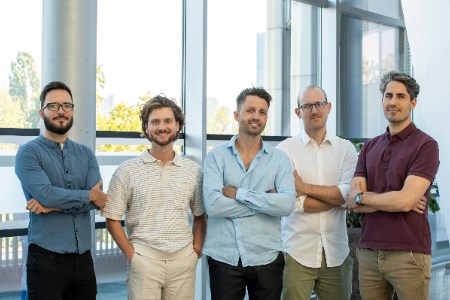
With Robert Pachler, sequestra is bringing commercial leadership from heavy industry into the company. Pachler was previously CEO of an internationally leading supplier of technology for heavy industry and holds a PhD in process engineering with a focus on carbon capture. His appointment as Chief Commercial Officer follows a noticeable rise in demand from industrial operators and marks the point at which sequestra moves from technology development to market entry. Pachler is the second senior appointment within a few months: In September, Matthias Ginterseder joined as Chief Scientific Officer. Together with the three founders, the two complete sequestra’s leadership team.
Industrial technology for permanent CO2 binding
sequestra develops industrial process technology that permanently binds CO2 in mineral residues, such as steel slags, ashes, cement kiln dust and construction and demolition waste. At the core is a combined grinding and carbonation process. It is built to be integrated directly into existing industrial sites, where both the CO2 and the residues are produced. The CO2 reacts with the material and becomes permanently fixed as a stable carbonate. Depending on the feedstock, the carbonated material can then be used in the construction sector, for example as a supplementary cementitious material or an aggregate, lowering the CO2 footprint of building materials.
Each plant is designed on a solid data basis. Before a plant is planned, the sequestra Intelligence business unit analyses the customer's material in the company's world's first laboratory for carbonation analytics, using the proprietary Luma platform. A roughly 3 kg sample is enough to determine the CO2 binding potential, the process parameters and the business case of a future plant. The same measurement methods later provide the basis for monitoring, reporting and verification (MRV) of the CO2 stored during operation.
A growing market in compliance and carbon removal
Regulation is turning CO2 mineralisation into a commercial opportunity. In the EU Emissions Trading System, CO2 that is permanently chemically bound in a product counts as not emitted. For operators in steel, cement, lime, or waste incineration, every tonne of captured and mineralised CO2 therefore directly reduces the number of emission allowances they have to buy. This effect grows as the free allocation of allowances is phased out.
At the same time, the carbon removal market is developing. When biogenic CO2, for example from biomass combustion, or CO2 from the atmosphere is mineralised, the result is a permanent carbon removal. With the EU framework for certifying carbon removals and the legislative proposal for the revised ETS (COM(2026) 616), the European Commission is paving the way to bring such removals into the mandatory emissions trading system in the future. For industrial companies, their mineral residues are thus turning from a disposal cost into a strategic asset.
Industrial leadership for market entry
Robert Pachler will lead the commercialisation of this offering. In his previous role, he substantially expanded the product portfolio and significantly grew revenues in a market where investment decisions are made by process engineers and CFOs alike. That combination of technical depth and commercial track record is what sequestra needs at this stage.
At sequestra, Pachler is responsible for the full commercial path: From the first material analysis through the business case to selling and implementing industrial carbonation plants at partner sites.
“Industrial customers invest in technology when it works reliably in their process and pays off economically. With rising CO2 prices in the emissions trading system and a growing market for carbon removals, mineralisation is reaching exactly that point now. sequestra has a technology designed for industrial scale and the data to prove it works. My task is to turn that into long-term industrial partnerships,” said Robert Pachler.
Clear path to the first industrial plants sequestra is currently building its first pre-industrial process line for combined grinding and carbonation at its technology centre in Attnang-Puchheim. The goal is to sell the first industrial-scale plant by the end of 2027. The company's market entry focuses on the DACH region, followed by expansion across the EU.
“With Robert, we are gaining a leader who knows heavy industry from the customer's side. He understands the technology down to the process-engineering details and has shown that he can grow an industrial technology business. That is exactly what we need as we bring our first industrial plants to market and help our customers turn a disposal cost into a revenue stream,” said Lukas Höber, Co-Founder and Co-CEO of sequestra.
Click here for free registration to World Cement
Check out the World Cement Podcast
Read the article online at: https://www.worldcement.com/europe-cis/08102026/sequestra-appoints-former-ceo-of-a-leading-heavy-industry-technology-company-as-chief-commercial-officer/
You might also like
The World Cement Podcast
A podcast series for professionals in the cement industry featuring short, insightful interviews. Subscribe on your favourite podcast app to start listening today.


