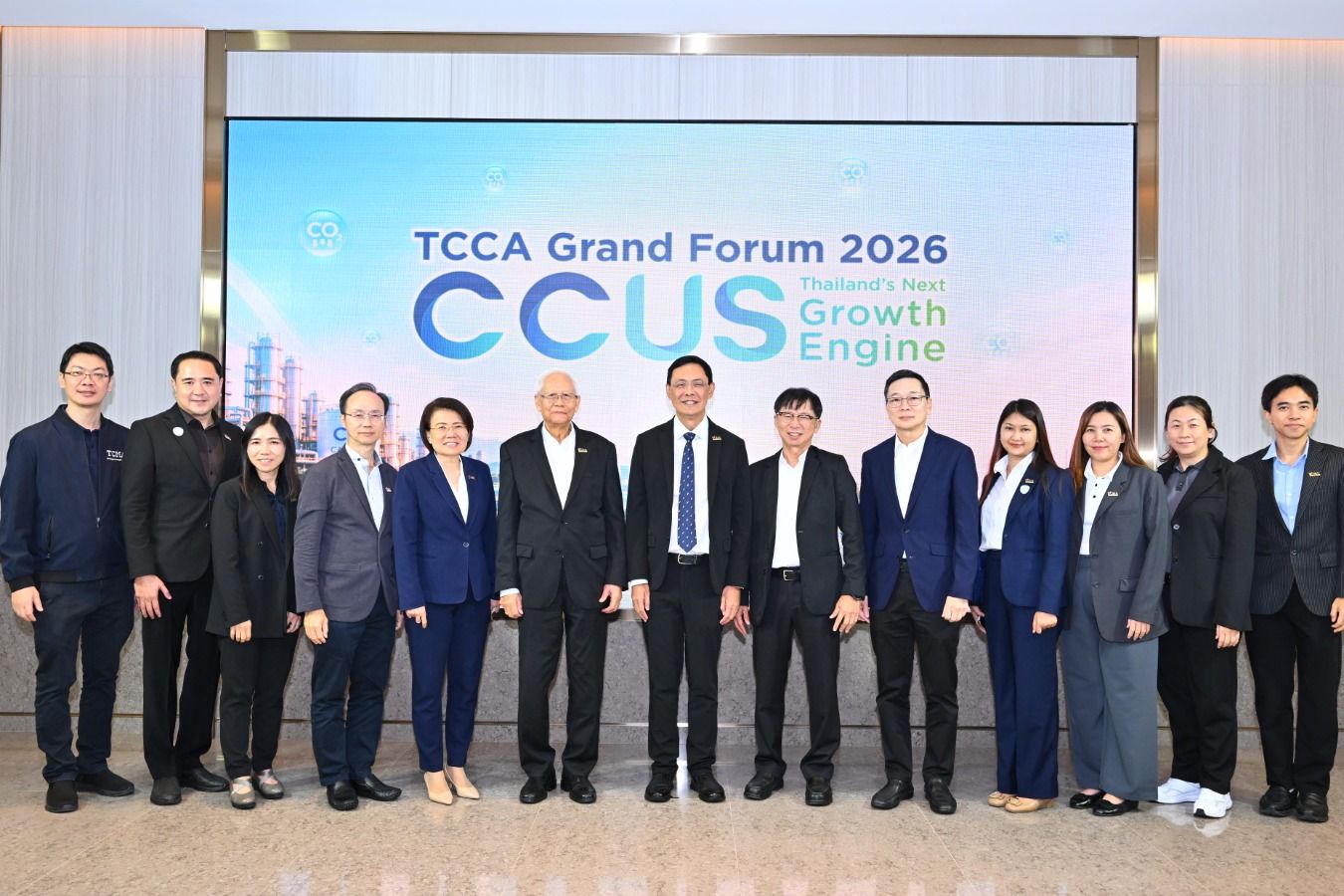
Speaking at the Thailand CCUS Grand Forum 2026, Mr. Surachai Nimla-or, Chairman of TCMA, emphasised that achieving Net Zero 2050 in the cement industry – a hard-to-abate sector – requires an integrated approach combining energy transition, materials innovation, advanced technologies, and supportive policies.
Through the Thailand 2050 Net Zero Cement and Concrete Roadmap, TCMA and its members are advancing key decarbonisation pathways, including energy efficiency, clean energy, alternative fuels, and the transition toward lower-carbon cement products such as hydraulic cement and Limestone Calcined Clay Cement (LC3). As process emissions from clinker production cannot be fully eliminated through energy and fuel improvements alone, CCUS is an essential complementary pathway. TCMA sees CCU as a practical starting point for technology demonstration and value creation, while preparing for CCS as part of the industry's longer-term transition.
One notable example is the pilot deployment of a Mobile Carbon Capture Unit (MCCU), representing the first trial of this technology in Thailand's cement industry, at the Saraburi Sandbox. The MCCU was developed by the Clean Energy Technologies Research Institute (CETRI), University of Regina, Canada, under the project 'Decarbonisation of the Cement and Concrete Sectors in Thailand.' The project is supported by Environment and Climate Change Canada (ECCC), with the Global Cement and Concrete Association (GCCA) and Chulalongkorn University providing support, while the United Nations Industrial Development Organisation (UNIDO) manages the project. The pilot will help build operational knowledge, assess technical and economic feasibility, and explore pathways for future industrial deployment.
Beyond capturing CO₂, TCMA is exploring opportunities to convert it into valuable products and applications, including low-carbon methanol and CO₂-cured construction materials such as fibre cement products and concrete blocks. These initiatives aim to connect carbon capture technology with product innovation and emerging markets.
To unlock CCUS development in Thailand, five enabling factors are particularly important:
Clear policy and regulatory frameworks.
Finance and investment incentives.
Shared infrastructure and cross-sector collaboration.
Technology readiness and innovation.
Market demand and carbon value creation.
Progress in these areas will help build investor confidence and support the transition from pilot projects to commercial applications.
CCUS also presents an opportunity to strengthen Thailand's industrial capabilities and create new business opportunities in engineering, equipment, digital solutions, research, and workforce development. According to estimates referenced in Thailand's CCUS Industrialisation Master Plan, achieving CO₂ management capacity of approximately 60 million tpy by 2050 could generate an estimated cumulative economic value of THB 1.06 trillion and support approximately 585 194 jobs during the period 2025 – 2050.
"The next step is to move from studies to action, from pilot projects to investment, and from collaboration to new economic opportunities. TCMA is committed to serving as a Climate Solutions Partner, connecting strategy, technology, research, and partners to transform the potential of carbon management into economic value and tangible outcomes for Thailand. Through its 'Reimagining Carbon: From Capture to Value Creation' vision, TCMA aims to accelerate the Thai cement industry's transition toward Net Zero 2050, while fostering innovation, strengthening competitiveness, and contributing to the country's sustainable growth," Mr. Surachai concluded.